- Mumbai Hype
- Posts
- CST Station Mumbai: Inside the UNESCO World Heritage Marvel That Defines the City
CST Station Mumbai: Inside the UNESCO World Heritage Marvel That Defines the City
Discover CST Station Mumbai (Chhatrapati Shivaji Terminus) - a UNESCO World Heritage Site blending Victorian Gothic and Indian architecture. Complete guide to history, architecture, and visiting tips.

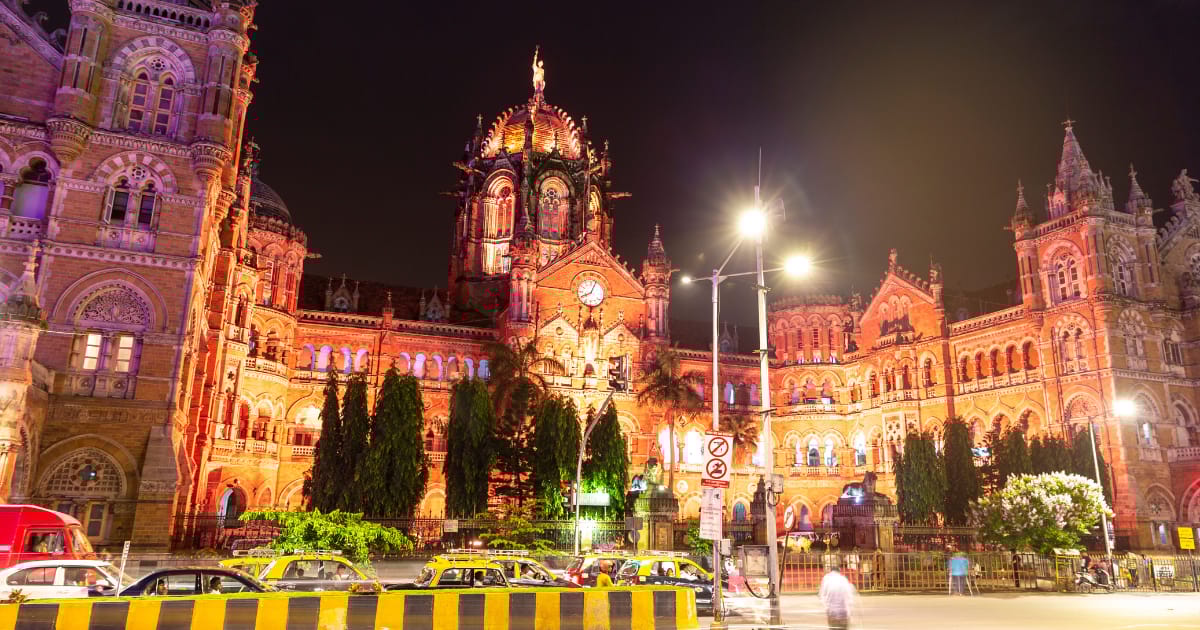
Standing majestically in the heart of South Mumbai, Chhatrapati Shivaji Terminus—affectionately known as CST or VT by locals—is far more than a railway station. It's a living monument that captures Mumbai's soul, a testament to architectural brilliance, and India's second most photographed monument after the Taj Mahal. Every day, over three million commuters pass through its grand arches, yet few pause to truly appreciate the marvel they're walking through.
If you've ever wondered what makes this 137-year-old station a UNESCO World Heritage Site, or why it continues to captivate architects and history enthusiasts from around the world, you're about to discover the fascinating story of Mumbai's most iconic landmark.
A Station Built for Royalty
The story of CST begins in 1878, during the height of British colonial rule in India. Back then, Mumbai (then Bombay) was rapidly emerging as the subcontinent's premier port city and commercial hub. The old Bori Bunder railway station simply couldn't handle the surging traffic, and the British decided to build something extraordinary—a railway terminus that would announce Bombay's arrival on the world stage.
British architect Frederick William Stevens was commissioned to design the new station, and he spent months touring Europe for inspiration. The project took an ambitious ten years to complete, finishing in 1887, perfectly timed to commemorate Queen Victoria's Golden Jubilee. Stevens was paid ₹1,614,000 for his services—a princely sum at the time—and he earned every rupee.
Originally named Victoria Terminus (VT), the station was renamed Chhatrapati Shivaji Terminus in 1996 to honor the 17th-century Maratha warrior king. In 2017, it was further extended to Chhatrapati Shivaji Maharaj Terminus (CSMT), though Mumbaikars still affectionately refer to it as VT or CST.
An Architectural Masterpiece: Where Two Worlds Meet
What makes CST truly extraordinary isn't just its Victorian Gothic grandeur—it's the seamless fusion of British and Indian architectural traditions. Stevens didn't simply import European styles; he collaborated with Indian craftsmen from the nearby Sir J.J. School of Art to create something entirely new and unique to Bombay.
The Magnificent Dome
The centerpiece of CST is its breathtaking octagonal ribbed dome—the only stone dome of its kind on any railway station in the world. Rising high above the main atrium, this architectural marvel was built without centering (temporary wooden support), a revolutionary engineering feat for the 1880s. The dome sits on a high drum pierced by two levels of stained-glass panels depicting the coat of arms of the Great Indian Peninsular Railway.
Crowning the dome is the 16.6-foot-tall Statue of Progress—a female figure holding a flaming torch in her right hand and a spoked wheel in her left. This statue has its own dramatic history: it was struck by lightning in 1969 and had to be restored at the J.J. School of Art before being returned to its perch.
The Facade: A Symphony in Stone
The building's exterior is a riot of architectural detail that rewards close inspection. Constructed primarily from golden Malad sandstone and limestone, the facade features:
Pointed Gothic arches reminiscent of medieval Italian cathedrals
Elaborate turrets and spires that dot the skyline
Intricate stone carvings depicting local flora, fauna, and animals—all carved by Indian craftsmen
A grand porte-cochère (covered entrance) flanked by two ornate octagonal towers
Lion and tiger statues at the entrance representing Great Britain and India
The entrance is watched over by a sculpted lion bearing the coat of arms of the Great Indian Peninsular Railway—a reminder that this wasn't just a station but the headquarters of one of India's most important railway companies.
The Interior Splendor
Step inside CST, and you'll find yourself in a cathedral of transportation. The main concourse features:
Soaring vaulted ceilings that create an awe-inspiring sense of space
Elaborate stained-glass windows specially commissioned and shipped from England, featuring details like elephants with ruby glass howdahs and steam engines puffing smoke
A magnificent cantilevered spiral staircase built without external supports, with each stone slab measuring 8.5 feet in width
Intricate wood carvings in Burma teak
Ornate metalwork and iron grillwork that was state-of-the-art when the station opened
The architectural detailing extends to every corner—from decorative jaalis (perforated stone screens) on the walls to elaborate cornices and mouldings, all executed according to Stevens' detailed drawings.
UNESCO Recognition: Why It Matters
On July 2, 2004, CST was declared a UNESCO World Heritage Site, joining an elite list of globally significant monuments. But what exactly earned it this distinction?
According to UNESCO, CST represents "an outstanding example of the meeting of two cultures, as British architects worked with Indian craftsmen to include Indian architectural tradition and idioms thus forging a new style unique to Bombay."
The station embodies several qualities that UNESCO considers of "outstanding universal value":
Architectural Innovation: The octagonal ribbed stone dome adapted to Gothic Revival architecture was unprecedented
Cultural Fusion: The building seamlessly blends Victorian Gothic with traditional Indian palace architecture
Historical Significance: It symbolizes Bombay's transformation into a major international port and India's gateway to the West
Artistic Excellence: The 3D stone carvings, stained glass, and sculptural details represent the peak of 19th-century craftsmanship
Engineering Achievement: The station showcased cutting-edge structural and railway engineering
CST is actually a rare example of being part of two UNESCO World Heritage Sites—it's listed individually and also as part of the Victorian Gothic and Art Deco Ensembles of Mumbai, inscribed in 2018.
A Living, Breathing Station
Unlike many heritage monuments that serve only as museums, CST remains a fully functional railway hub—and one of India's busiest. The station features 18 platforms: seven for suburban local trains and eleven (platforms 8-18) for long-distance services connecting Mumbai to cities across India.
Premium trains like Rajdhani, Duronto, Garib Rath, and Tejas Express depart from Platform 18. The station also offers air-conditioned dormitories with 58 beds for men and 20 for women, inaugurated in 2013 for passengers needing rest between journeys.
The first local train leaves CST as early as 4:19 AM, and trains continue running through the night, ferrying office workers, students, tourists, and the famous Mumbai dabbawalas carrying home-cooked lunches across the city.
Beyond Architecture: CST in Popular Culture
CST's cinematic grandeur has made it a favorite filming location for Bollywood and international productions. The Oscar-winning film "Slumdog Millionaire" featured memorable scenes shot at the station, introducing CST to global audiences. Countless Bollywood films have used its dramatic backdrop to capture the essence of Mumbai.
The station has also witnessed darker moments in history. On November 26, 2008, CST became one of the targets during the Mumbai terror attacks. Two terrorists opened fire in the passenger hall, killing 58 people and injuring 104 others. A memorial now stands at the station, honoring the victims of that tragic night.
Modern Illumination
Since 2022, CST has received a stunning modern upgrade: LED lighting that illuminates the heritage building in the evenings. The lighting scheme changes thematically, particularly for Indian national holidays like Independence Day and Republic Day, when the building glows in saffron, white, and green—the colors of the Indian flag.
This tasteful illumination has made CST even more photogenic after dark, drawing photographers and tourists who capture the building's Gothic spires and domes bathed in colored light against Mumbai's night sky.
Visiting CST: What You Need to Know
Getting There
CST is located in the Fort area of South Mumbai, making it easily accessible:
By Train: All local trains on the Central Line stop at CST. It's the terminus, so you can't miss it.
By Road: Numerous buses, taxis, and auto-rickshaws serve the area. Use GPS coordinates or simply tell your driver "CST" or "VT"—everyone knows it.
From the Airport: Chhatrapati Shivaji Maharaj International Airport is approximately 25 kilometers away. A taxi takes about an hour depending on traffic and costs ₹300-500.
Best Time to Visit
The station operates 24/7, but for architectural appreciation and photography:
Early morning (6-9 AM): Natural light is beautiful, though rush hour crowds can be intense
Late morning (10 AM-12 PM): Fewer crowds, good lighting
Late afternoon (4-6 PM): Golden hour photography opportunities
Evening (after 7 PM): The LED illumination makes the building spectacular
Entry and Tours
Entry Fee: Free! CST is a functioning railway station, so public access is unrestricted.
Heritage Tours: Guided weekday heritage tours are available that take you inside restricted areas like the offices and closer to the dome. Check with the Central Railway office for schedules.
Photography: Generally allowed in public areas. Professional shoots may require special permission.
Nearby Attractions
Make a day of exploring South Mumbai's heritage corridor:
Gateway of India (2 km): Mumbai's iconic seafront monument
Taj Mahal Palace Hotel (2 km): Historic luxury hotel
Prince of Wales Museum/CSMVS (2 km): Extensive art and artifact collection
Asiatic Society Library (500 meters): Beautiful colonial-era library
Bombay High Court (1 km): Another Gothic architectural gem
Mumbai University (1 km): George Gilbert Scott-designed campus
Practical Tips
Respect the commuters: CST serves millions of daily passengers. Be mindful not to block pathways during rush hours (8-11 AM and 5-8 PM).
Keep valuables secure: Like any busy public space, stay aware of your belongings.
Look up: Many of the best architectural details are on the upper levels—the ceiling carvings, stained glass in the dome, and sculptural elements.
Hidden gem: There's a small museum inside the station showcasing its history. Ask station staff for directions.
Best photo spots: The main entrance from the east side, the central dome from inside, and the illuminated building at night.
The Preservation Challenge
Maintaining a 137-year-old heritage structure that handles three million people daily is no small feat. The Indian Railways, through its Architectural Conservation Cell, has undertaken multiple restoration phases since 1997.
Recent conservation work has included:
Cleaning and restoring the building's facade
Repairing structural damage from weathering and pollution
Restoring intricate stone carvings and statues
Installing the LED lighting system
Improving tourist facilities while maintaining heritage integrity
Managing traffic flow around the site
These efforts balance the competing demands of preserving historical authenticity while meeting modern transportation needs—a challenge that CST navigates more successfully than perhaps any heritage railway station in the world.
Why CST Matters to Mumbai
For Mumbaikars, CST is far more than a beautiful old building. It's the beating heart of the city's transportation network, connecting suburbs to the city center and linking Mumbai to the rest of India. It's where millions of daily journeys begin and end—where people chase dreams, reunite with loved ones, and build their lives.
The station embodies Mumbai's character: grand yet functional, historical yet contemporary, a monument that doesn't just stand as a relic of the past but actively shapes the present. It represents the city's unique ability to honor its heritage while remaining intensely focused on the future.
The Tangible Proof
Chhatrapati Shivaji Terminus stands as tangible proof that architecture can be both beautiful and functional, that heritage and progress aren't opposing forces, and that great design transcends time. Whether you're a history buff, architecture enthusiast, photographer, or simply someone who appreciates extraordinary human achievement, CST deserves a spot on your Mumbai itinerary.
The next time you rush through CST to catch a train, or pass it in a taxi on your way to South Mumbai, take a moment to look up. Notice the stone carvings that have survived more than a century. Admire the dome that still, after all these years, stands as a pinnacle of architectural innovation. Appreciate the vision that created a station not just for its time, but for all time.
In a city constantly reinventing itself, CST reminds us that some things—when built with passion, skill, and vision—truly are timeless.