- Mumbai Hype
- Posts
- Gateway of India: The Untold Story of Mumbai's Iconic Monument
Gateway of India: The Untold Story of Mumbai's Iconic Monument
Discover the fascinating history of Gateway of India Mumbai, from its construction in 1924 to becoming the city's most iconic landmark. Complete guide inside.

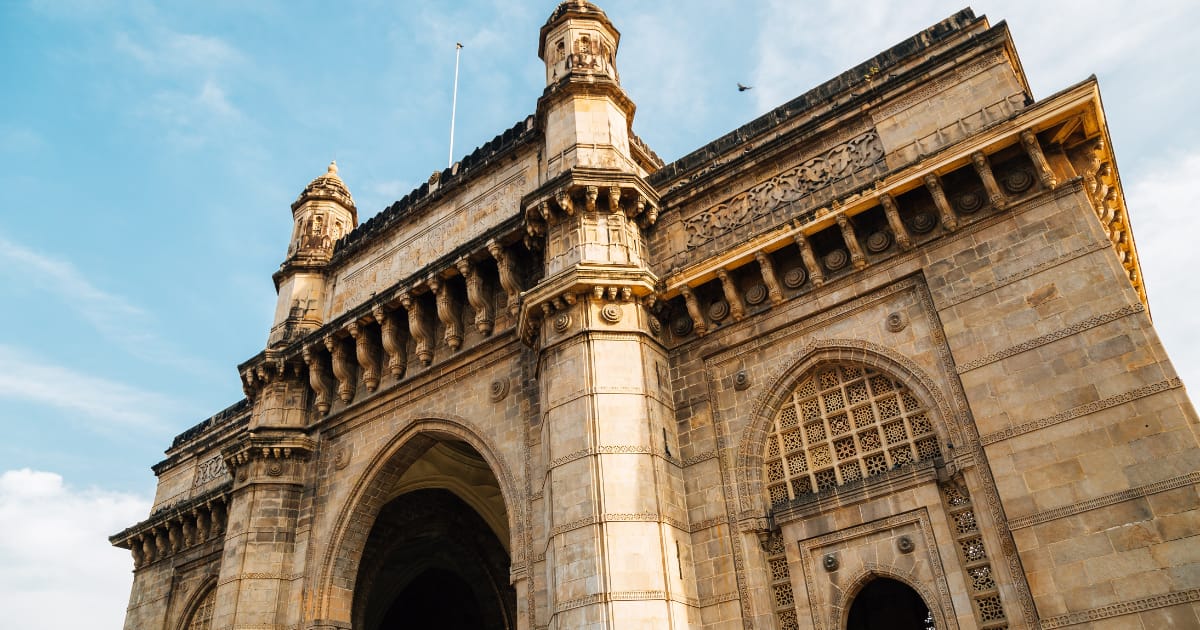
Standing majestically on the waterfront of Apollo Bunder, the Gateway of India is more than just a stone archway—it's the beating heart of Mumbai's colonial legacy and a symbol of the city's indomitable spirit. Every day, thousands of visitors from across the globe gather at this iconic monument, drawn by its architectural grandeur and the compelling stories etched into its yellow basalt stones.
The Birth of an Icon: Why Was Gateway of India Built?
The story of the Gateway of India begins on a momentous day in December 1911. King George V and Queen Mary, the first British monarchs to visit India, were scheduled to arrive at Apollo Bunder in Mumbai. The British government wanted to create a fitting monument to commemorate this historic royal visit—something that would symbolize the grandeur and power of the British Raj.
However, here's where the story takes an interesting turn. When the royal couple actually arrived in 1911, the Gateway of India didn't exist—at least not in its current form. Instead, they were greeted by a hastily constructed cardboard model of the future monument. It's one of history's delightful ironies that one of India's most photographed landmarks started as a temporary cardboard cutout.
The foundation stone for the actual structure was laid on March 31, 1913, by Sir George Sydenham Clarke, the then Governor of Bombay. But the approval of the final design would take another year, and the construction itself would span nearly a decade.
The Architect's Vision: George Wittet's Masterpiece
Scottish architect George Wittet received the commission to design this monumental gateway in 1914. Wittet had already made his mark on Mumbai's architectural landscape, having designed the Prince of Wales Museum (now known as Chhatrapati Shivaji Maharaj Vastu Sangrahalaya). For the Gateway of India, he chose the Indo-Saracenic architectural style—a unique fusion that would become the monument's defining characteristic.
Indo-Saracenic architecture represented a conscious British attempt to blend European classical architecture with Indian and Islamic architectural elements. In the Gateway of India, Wittet incorporated features from 16th-century Gujarati architecture, including intricate jaali work (perforated stone screens) and elements that echoed the grand arches of Mughal monuments.
The choice wasn't merely aesthetic. By incorporating motifs from India's rich architectural heritage, particularly Mughal influences, the British were attempting to draw a connection between themselves and previous rulers of India, thereby arguing for the legitimacy of colonial rule.
Construction: Building a Legacy
The construction of the Gateway of India was no small feat. Between 1915 and 1919, significant land reclamation work transformed the crude harbor front into a proper foundation with a sturdy seawall. The monument itself was constructed using yellow basalt stone sourced locally, set upon a reinforced concrete structure—a relatively new building technique at the time.
The Gateway of India stands 26 meters (85 feet) tall, with an impressive central dome measuring 15 meters (50 feet) in diameter. Four ornamental turrets surround this dome, each featuring delicate latticework carved into the stone. The perforated screens were specially imported from Gwalior, adding to the monument's refined aesthetic.
The total cost of construction was 2.1 million rupees—a substantial sum in the aftermath of World War I. This entire expense was borne by the Indian government, not the British Crown, adding another layer of complexity to the monument's colonial history.
Finally, on December 4, 1924, thirteen years after the royal visit it was meant to commemorate, the Gateway of India was officially opened to the public by Rufus Isaacs, Earl of Reading and Viceroy of India.
The Symbolic Gateway: Entry and Exit Point of an Empire
Throughout British rule, the Gateway of India served as the ceremonial entrance point for Viceroys and important colonial personnel arriving in India by sea. It was designed to be the first impressive sight that greeted dignitaries as their ships entered Mumbai Harbor—a statement of imperial power and permanence.
But history has a way of writing its own endings. The monument built to welcome British royalty would, just 24 years after its completion, witness one of the most symbolic departures in Indian history.
On February 28, 1948, the last British troops stationed in India—the 1st Battalion of the Somerset Light Infantry—marched through the Gateway of India with a ceremonial parade. Indian troops presented a royal salute, and a silver replica of the Gateway was presented to the departing regiment. As the British soldiers passed through the arch, they symbolically exited from India, marking the end of nearly 200 years of colonial rule.
The sun had finally set on the British Raj, and it set through the very monument built to celebrate its glory. Today, this moment is remembered as one of the most poignant chapters in India's independence story.
Architectural Marvel: Understanding the Design
The Gateway of India is a study in architectural fusion. The monument's design can be understood through several key features:
The Central Arch: The dominant feature is the massive basalt arch, reminiscent of Roman triumphal arches but infused with Islamic architectural elements. The pointed arch style, characteristic of Islamic architecture, creates an imposing yet elegant silhouette against the Mumbai skyline.
The Dome and Turrets: The central dome, with its 15-meter diameter, showcases Muslim architectural influences. The four turrets that flank the structure add verticality and grace, their carved latticework demonstrating the skill of Indian craftsmen.
Jaali Work: The intricate perforated screens, or jaali, are perhaps the most distinctly Indian element of the design. This technique, borrowed from Mughal architecture, allows for natural ventilation while creating beautiful patterns of light and shadow.
The Foundation and Steps: Behind the main arch, steps lead down to the Arabian Sea, originally intended to allow dignitaries to disembark directly from their boats onto Indian soil. Today, these steps serve as a gathering place for locals and tourists alike, offering stunning views of the sea and the passing boats.
Gateway of India Today: Mumbai's Living Landmark
Today, the Gateway of India has transcended its colonial origins to become a beloved symbol of Mumbai itself. Often called the "Taj Mahal of Mumbai," it's the city's most visited tourist attraction and a gathering place for locals and visitors alike.
On any given day, the area around the Gateway buzzes with life. Street photographers offer to capture memories, vendors sell everything from balloons to bhelpuri, and tourists from around the world mingle with Mumbai locals. The atmosphere is quintessentially Mumbai—chaotic, vibrant, and full of energy.
The monument has also become a cultural hub. During the Elephanta Festival in February and March, classical dancers and musicians perform against the backdrop of the Gateway, celebrating India's rich artistic traditions. The monument has been featured in countless Bollywood films, most notably serving as the backdrop for the climactic scene in the 1989 film "Parinda."
What Makes Gateway of India Special?
Beyond its historical significance and architectural beauty, the Gateway of India occupies a unique place in Mumbai's cultural landscape for several reasons:
Symbol of Resilience: The Gateway has witnessed some of Mumbai's darkest hours, including the terrorist attacks of 1993 and 2008. Each time, it has stood strong, becoming a symbol of the city's resilience and determination.
Democratic Space: Unlike many historical monuments that feel distant and inaccessible, the Gateway of India is thoroughly democratic. Entry is free, and the space welcomes everyone—from tourists taking selfies to locals enjoying the sea breeze, from artists performing to children playing.
Gateway to Experiences: The monument serves as a jumping-off point for various Mumbai experiences. From here, ferries depart for the UNESCO World Heritage Site of Elephanta Caves. The nearby Colaba Causeway offers shopping and street food experiences, while the iconic Taj Mahal Palace Hotel stands majestically adjacent to the Gateway.
Visiting the Gateway of India: A Complete Guide
Location: The Gateway of India is located at Apollo Bunder, Colaba, South Mumbai, overlooking the Arabian Sea. It's positioned at the end of Chhatrapati Shivaji Marg.
Timings: The monument is open 24/7, but the best times to visit are early morning (6 AM - 8 AM) for peaceful views and good photography light, or evening (6 PM - 10 PM) when the monument is illuminated and the atmosphere is lively.
Entry Fee: There is no entry fee to visit the Gateway of India itself. However, if you wish to take a ferry to Elephanta Caves, tickets cost approximately ₹150-200 for a round trip.
Best Time to Visit: October to March offers the most pleasant weather, with cooler temperatures and minimal rainfall. The post-monsoon period is particularly beautiful, though you'll find crowds year-round.
How to Reach:
By Train: The nearest station is Chhatrapati Shivaji Maharaj Terminus (CSMT), about 2.5 km away
By Road: Taxis, auto-rickshaws, and local buses connect the Gateway to all parts of Mumbai
By Air: From Mumbai Airport, it's approximately 25 km and can be reached by taxi or cab services
Things to Do at Gateway of India
Photography: The backdrop of the sea and monument creates picture-perfect opportunities, especially during sunrise and sunset.
Ferry Rides: Take a boat trip to Elephanta Caves, an ancient rock-cut cave temple complex dedicated to Lord Shiva and designated as a UNESCO World Heritage Site.
People Watching: The Gateway is one of the best places in Mumbai for observing the city's incredible diversity. On any given day, you'll see tourists from around the world, local families on outings, street performers, and vendors creating a vibrant tapestry of urban life.
Street Food: The area around the Gateway offers authentic Mumbai street food. Don't miss trying vada pav (Mumbai's beloved spicy potato burger), bhel puri, and pav bhaji from the nearby vendors.
Visit Nearby Attractions: The Taj Mahal Palace Hotel, Colaba Causeway Market, and the Prince of Wales Museum are all within walking distance.
The Gateway in Popular Culture
The Gateway of India has been immortalized in countless photographs, paintings, and films. It has appeared in numerous Bollywood movies as a representation of Mumbai itself. The monument's instantly recognizable silhouette has become shorthand for the city in visual media.
For many Indians living abroad, the Gateway of India represents a powerful connection to home. It's often among the first places NRIs (Non-Resident Indians) visit when returning to Mumbai, making it not just a historical monument but an emotional touchstone.
Conservation Efforts
Like many heritage structures exposed to coastal elements, the Gateway of India faces ongoing conservation challenges. Salt accumulation from the Arabian Sea, air pollution, and the wear and tear of millions of annual visitors take their toll on the structure.
In 2019, CyArk, in collaboration with the Directorate of Archaeology and Museums, Government of Maharashtra, documented the Gateway using advanced laser scanning and photogrammetry. This digital preservation effort ensures that even as the physical structure ages, its architectural details are preserved in perpetuity.
The Archaeological Survey of India, which manages the site, conducts regular maintenance and restoration work to preserve this national treasure for future generations.
Gateway of India: Facts and Trivia
The monument took 13 years from conception to completion
It's made of yellow basalt stone and reinforced concrete
Height: 26 meters (85 feet)
Central dome diameter: 15 meters (50 feet)
Cost: 2.1 million rupees (1924 value)
A statue of Chhatrapati Shivaji now stands near the Gateway, replacing the statue of King George V that was removed after independence
The monument is illuminated at night, creating a spectacular view
The Future of an Icon
As Mumbai continues to evolve into a global metropolis, the Gateway of India remains a constant—a link to the city's complex past and a symbol of its vibrant present. Plans for improving the area around the Gateway, including better tourist facilities and enhanced security, aim to preserve its accessibility while protecting this invaluable heritage structure.
The Gateway of India's journey from a symbol of colonial power to an emblem of independent India's spirit mirrors the nation's own transformation. It reminds us that monuments don't just represent the intentions of those who built them—they take on new meanings as history unfolds around them.
More Than Just a Monument
The Gateway of India is proof that architecture can transcend its original purpose. What began as a monument to imperial grandeur has become a democratic space, a tourist attraction, a cultural venue, and most importantly, a symbol of Mumbai's identity.
Whether you're a history enthusiast drawn to its colonial past, an architecture lover appreciating its Indo-Saracenic design, or simply someone wanting to experience the pulse of Mumbai, the Gateway of India offers something profound. It stands as a reminder that while history shapes our monuments, monuments also shape how we remember and interpret history.
The next time you visit the Gateway of India, take a moment to look beyond the crowds and the cameras. Listen to the waves against the steps, observe the intricate jaali work catching the sunlight, and remember that you're standing at a place where empires rose and fell, where history was made, and where Mumbai's past and present converge in stone and sky.